Homes across Black Creek tend to be wood-frame construction built from the fifties through the seventies, most with basements where the panel lives and original wiring that was never sized for today's loads. The electrical contractors in Green Bay network reaches these houses with electricians who know what that wiring looks like and what it does when it starts to fail. A call about flickering lights or a breaker that will not reset often points to a panel that has been running past its limit for years. Professional electrical panel upgrade work is one of the most common calls from this area.
Black Creek homeowners call a local electrician rather than a general one because the houses here have specific quirks that show up the moment a job starts, and knowing them in advance is what keeps a half-day job from becoming a two-day one.
What Local Electricians Know About Black Creek Homes
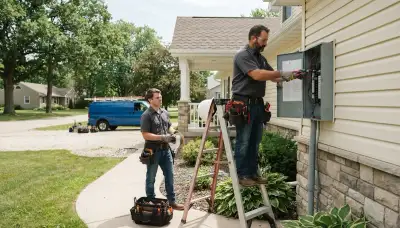
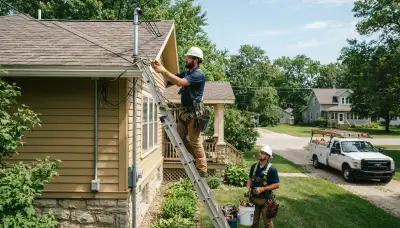
A local electrician working in Black Creek knows where the panel sits, how the wiring runs through a finished basement, and what a house built in the fifties and sixties typically has behind the walls. That knowledge changes how a job gets planned before anyone picks up a tool.
Two kinds of work come up repeatedly in these homes: panels that have run out of room for new circuits and wiring that has aged past the point of safe use. Electricians serving electrical contractor in Wrightstown, WI and Black Creek see both in houses built the same way.
If something in your home is warm to the touch, tripping repeatedly, or simply not working the way it should, getting it looked at now costs far less than waiting.
Electrical Work Matched to How Black Creek Homes Are Built
An off-the-shelf approach runs into trouble fast in homes built the way most Black Creek houses are. A basement panel with original wiring and a finished ceiling between floors means running a new circuit is not a simple pull; it means planning the route before the work starts.
Wood-frame homes with full basements give good panel access but can make upstairs runs slow when ceilings are finished. Homes with detached garages add long outdoor runs that age differently from the house wiring. Expert ceiling fan installation in a home with a finished ceiling, for example, requires a different approach than the same job in new construction.
The range of work these homes need includes quality generator installation, reliable GFCI circuit protection near water, specialist electrical wiring replacement, and professional smoke detector installation that meets current placement requirements.
How the Age of Black Creek Homes Shapes the Work Today
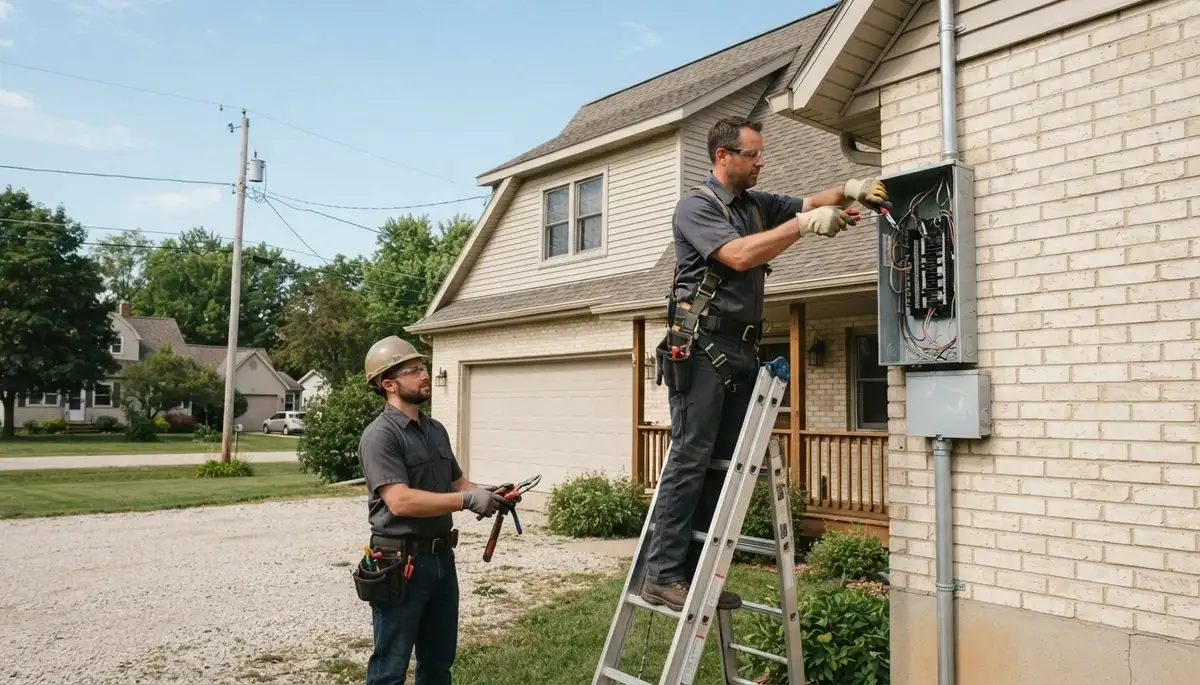
Most of the homes in Black Creek went up in the fifties and sixties, a period when a 60-amp panel was considered adequate and wiring ran without a ground wire. Three things follow directly from that: the panels are often full with no room for new circuits, the outlets in older rooms are two-prong, and some homes from the late sixties carry aluminum branch wiring that behaves differently from copper as connections age.
Fuses Still Running the House
A fuse box in the basement is not just outdated; it is a panel that cannot be expanded and that some homeowners have already pushed past its rating by swapping in oversized fuses. Connections run hot, and the risk of a wiring fire grows the longer it runs that way.
Local electricians replace fuse boxes with modern breaker panels sized for how the house is used today. Homeowners in Bonduel, WI electrical services and Black Creek both see this job done in a single day with power restored before evening.
Two-Prong Outlets Throughout the House
Two-prong outlets mean the wiring behind them has no ground path. Plugging a three-prong adapter into an ungrounded outlet does not add protection; it only changes the shape of the opening. Sensitive electronics and appliances are exposed to voltage spikes with no place for the energy to go.
Adding grounded outlets or installing the outlets with test and reset buttons where code allows gives the homeowner real protection. The work also reveals whether the wiring behind the outlet is in good enough shape to carry the load being asked of it.
Aluminum Wiring at the Connections
Homes built in the late sixties and into the early seventies sometimes have aluminum wiring on the branch circuits. Aluminum expands and contracts more than copper, and over decades the connections at outlets and switches work loose. A loose aluminum connection runs warm, and a warm connection that is ignored can arc.
Electricians address this by installing approved connectors at every device and verifying that the panel connections are tight. Two things improve immediately: the outlets stop running warm and the circuits hold their load without flickering.
A Panel That Was Never Sized for What Got Added
A 100-amp service made sense for a house with a gas range, no central air, and one bathroom. Add a second refrigerator, a chest freezer in the garage, window air conditioners running in summer, and a car charger in the driveway, and that same panel is being asked to carry twice what it was built for.
Adding capacity means upgrading the panel and, where needed, the service entrance to match. Once that work is done, the homeowner can run the car charger, the air conditioning, and the kitchen at the same time without a breaker tripping or lights dimming across the house.
Running New Circuits Through a Finished Basement
A finished basement ceiling between the panel and the floor above means a new circuit cannot simply be pulled through open joists. The route has to be planned, and in some cases a section of ceiling or wall has to be opened to get the wire where it needs to go.
Local electricians plan the route before the work starts, use existing chases where they exist, and patch what they open. The job gets done without leaving the homeowner with a ceiling that looks worse than before they called.
To arrange a no-pressure visit from a local electrician who knows these homes, call On Call Electrical at (920) 214-0220. The visit costs nothing, and the assessment is straight talk about what the house actually needs.
On Call Electrical handles every job in Black Creek, WI with work that holds.

Full Electrical Services Available in Black Creek, WI
The work listed below covers the full range of what a Black Creek homeowner might need, from urgent repairs to planned upgrades. Find the situation that matches yours and reach out.
Urgent Electrical Repairs in Black Creek, WI
- Electrical Repair - A breaker that trips every time the microwave runs, or an outlet that stopped working after a surge, needs attention before the problem spreads to other circuits.
- Outlet Repair - An outlet warm to the touch or one that sparks when something is plugged in is not a minor inconvenience; it is a connection that has failed inside the wall.
- Switch Repair - A switch that buzzes, feels warm, or only works when the toggle is held at a specific angle has a loose or failing connection behind the plate.
- Ceiling Fan Repair - A fan that wobbles, hums loudly, or stops responding to the wall switch often has a wiring issue at the box rather than a problem with the fan itself.
- Home Electrical Inspections - When a house changes hands or an addition is finished, a full inspection finds what the previous work left behind before it becomes the new owner's emergency.
For any of the repairs above, a call to (920) 214-0220 gets a local electrician to the house.
Panel, Service, and Wiring Work in Black Creek, WI
- Electrical Panel Upgrade - A panel with no open slots, one that runs warm, or one still using fuses needs to be replaced before new circuits can be added safely.
- Electrical Panel Installation - New construction or a full-service replacement calls for a panel sized for the loads the house will actually carry, not the loads it carried when it was first built.
- Electrical Service - The connection between the utility and the panel is the starting point for everything in the house; a service that is undersized limits every circuit downstream.
- Electrical Wiring - Original wiring in a house built in the fifties or sixties has had decades of use; replacement brings the circuits up to what the house is being asked to carry today.
- New Construction Wiring - An addition, a detached garage, or a finished basement needs wiring planned from the start so that every circuit is where it needs to be before the walls close.
Panel and wiring work in Black Creek, WI starts with an honest assessment of what the house has and what it needs to run reliably.
Safety and Protection Work in Black Creek, WI
- GFCI Circuits - Kitchens, bathrooms, and any outlet near water need a ground-fault circuit that cuts power in milliseconds when it detects a problem; older homes rarely have them.
- Whole Home Surge Protection - A single surge from the utility or from a large appliance cycling on can damage every device plugged in across the house; whole-home protection stops it at the panel.
- Lightning Surge Protection - A direct or nearby strike sends a voltage spike through the service entrance that a power strip cannot stop; panel-level protection is the right layer for a house.
- Smoke Detector Installation - Detectors placed in the wrong locations or running on batteries alone leave gaps; hardwired detectors with battery backup cover the house even when the power is out.
- Fire Alarm Installation - A full alarm system tied to the panel gives the house coverage that individual battery detectors cannot match, especially in a home with multiple floors.
Every item above addresses a risk that a homeowner in a Black Creek house built in the fifties or sixties can picture without much prompting. Getting the protection in place before something happens is the point. On Call Electrical handles all of it, and a call to (920) 214-0220 is the place to start. Work done right the first time does not need to be redone.
Lighting, Outdoor, and Added-Load Work in Black Creek, WI
- Recessed Lighting Installation - Adding recessed lights to a room with a finished ceiling requires planning the circuit and the box locations before cutting; the result is clean and permanent.
- Landscape Lighting - Outdoor lighting on a detached garage or along a walkway needs a circuit that was planned for outdoor use, not an extension of an indoor circuit run through a wall.
- Electric Car Charger Installation - A Level 2 charger draws more than most original panels were sized to handle; the charger installation and the panel capacity have to be assessed together.
- Security Lights - Motion-activated lights at the back of the house or above a detached garage need a dedicated outdoor circuit that holds up through years of use without tripping.
- Generator Installation - A standby or portable generator connected through a proper transfer switch keeps the house running without back-feeding the service and creating a hazard.
Added loads on a house built in the fifties and sixties have to be matched to what the panel can actually carry. On Call Electrical sizes the work to the house, not to a general estimate, so that what gets installed runs the way it should for years.