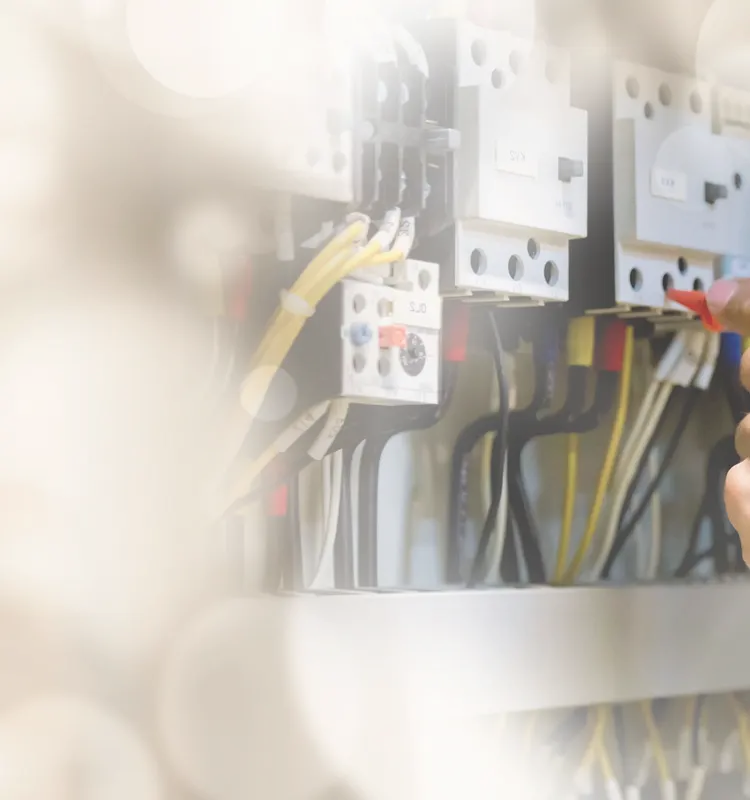
The homes in Bonduel are mostly wood-frame houses over full basements, built through the fifties and sixties when a 60-amp panel and a handful of circuits were enough for how a family lived. The electrical contractors in Green Bay network reaches these houses knowing what that era put inside the walls, and professional electrical panel upgrade work starts with understanding what the original service was sized to carry.
Homeowners here call a local electrician because the houses have a specific history - what was installed, how it ages, and what it cannot handle anymore is not something a stranger to these homes figures out quickly.
What Local Electricians Know About Bonduel Homes
A local electrician working in Bonduel knows that most of these houses were built in the fifties and sixties, that the panel is almost always in the basement, and that the wiring runs through finished walls that have not been opened since the house was new.
Two kinds of work come up constantly: panels that were never updated past their original capacity, and circuits that were added over the decades without accounting for what was already on the box. Homeowners in Pulaski, WI electrical services face similar patterns in houses from the same period.
Getting a local electrician to look at the panel before a problem grows is the step most homeowners wait too long to take.
Work Matched to How Bonduel Homes Are Actually Built
An off-the-shelf approach fails in these houses because the basement panel, finished ceilings, and long runs to detached garages each add time and complexity that a quick estimate does not account for.
Detached garages and outbuildings are common on these lots, and running a new circuit to one means trenching or overhead work that a house without a detached structure never requires. Homes with finished basements add another layer when a new circuit needs to reach the main floor. Expert ceiling fan installation in a house with plaster ceilings takes longer than the same job in newer drywall construction.
Four services that fit these houses directly: quality electrical wiring for walls that have not been opened in decades, specialist GFCI circuit installation for kitchens and bathrooms that were wired before those protections existed, reliable generator installation for a home where the panel needs a proper transfer setup, and professional home energy audit work to find where the load is going.
Why When Bonduel Homes Were Built Still Decides What They Need
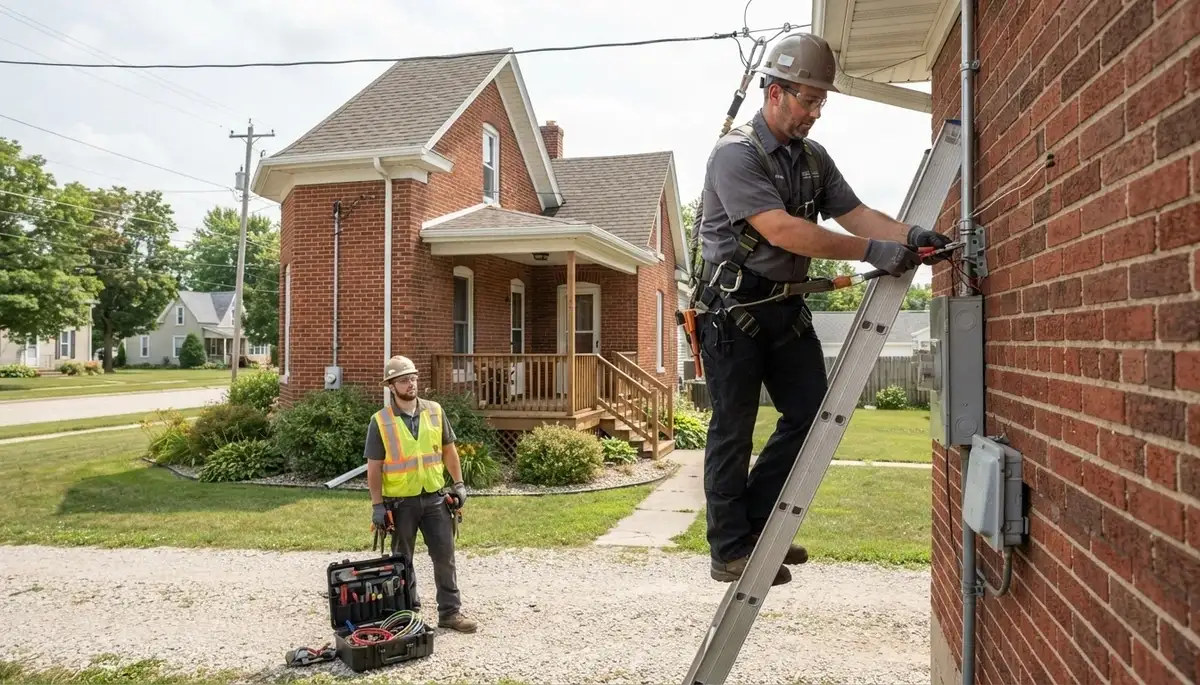
Most houses in Bonduel went up in the fifties and sixties. Homes from that stretch came with 60-amp service, two-prong outlets throughout, no grounding on branch circuits, and panels that were sized for lighting and a few appliances. Three things follow from that and still shape every job: the wiring is ungrounded, the panel has no room for new circuits, and the load those homes carry today is two or three times what they were designed for.
Breakers That Trip and Won't Reset
When a breaker trips and will not reset, or resets but trips again within minutes, the circuit is carrying more than the wiring behind it was sized for. In a house from this period, that often means a 15-amp circuit feeding a kitchen or bathroom that now runs a microwave, a coffee maker, and a hair dryer at the same time. Left alone, the wiring overheats at the connection points before the breaker catches it.
Local electricians correct this by adding a dedicated circuit for the heavy load and confirming the existing wiring at every connection point along the run. Homeowners in Seymour, WI with houses from the same decade have found the same fix holds for years once the circuit count matches how the rooms are actually used.
Outlets Warm to the Touch
An outlet that feels warm, or a light that dims when something else on the circuit starts, points to a connection that is resisting current rather than passing it cleanly. In homes built through the late sixties, aluminum wiring was used on branch circuits, and aluminum connections loosen over time in a way that copper does not.
The correction is to fit anti-oxidant compound and rated connectors at every aluminum termination point, or to replace the affected runs with copper where the wall access allows it. Afterward the outlets stay at room temperature and the lights hold steady.
Two-Prong Outlets Throughout the House
Two-prong outlets are what a house looks like when the wiring was installed before grounding was required. Plugging a three-prong adapter into an ungrounded outlet does not add protection - it only changes the shape of the opening. Years of use have not changed what the wiring can do; it still cannot carry a fault to ground the way a grounded system does.
Replacing two-prong outlets with GFCI-protected three-prong outlets is the code-accepted correction for ungrounded circuits. It adds shock protection at the outlet and allows three-prong plugs to seat properly without rewiring the entire circuit.
Panel Sized for a Load That No Longer Exists
A 60-amp or 100-amp panel was enough when these houses were new. Adding central air conditioning, a second refrigerator in the garage, and a car charger puts a load on that service that it was never sized for. On a cold morning when the furnace, the water heater, and the car charger all run together, the panel is working at or past its limit.
Adding capacity means replacing the panel and upgrading the service entrance to 200 amps, which gives the house room for what it already runs and what the homeowner plans to add. Afterward, the car charger, the air conditioning, and the shop tools in the garage can all run without the panel working past its rating.
Wiring Runs to Detached Structures
A detached garage or shed on a Bonduel lot often has a circuit that was run decades ago, sometimes without a proper disconnect at the structure, sometimes on wiring that was sized for a single light and a single outlet. Getting a new circuit to that building means trenching under the driveway or running overhead, and the path is rarely short.
Local electricians plan the route before the work starts, choose the method that disturbs the least of the yard, and install a proper subpanel in the structure so the homeowner can add circuits inside it later without another outdoor run.
Call (920) 214-0220 to arrange a no-pressure visit with a local electrician who can look at the panel, the wiring, and the detached structures and tell the homeowner exactly what needs attention first.
On Call Electrical handles the work in Bonduel homes the way it was meant to be done - correctly, the first time.

Full Electrical Services Available in Bonduel, WI
The work listed below covers the full range of what local electricians handle in Bonduel, WI. Find the item that matches the situation and call to talk through what it involves.
Urgent Electrical Repairs for Bonduel, WI Homes
- Electrical Repair - a breaker that trips repeatedly or an outlet that stopped working in a house where the wiring has not been touched in decades
- Outlet Repair - outlets that spark, feel warm, or no longer hold a plug in a home where the receptacles are original
- Switch Repair - a switch that clicks but does nothing, or one that stays warm after the light has been off for an hour
- GFCI Outlets - reset buttons that trip without a load, or bathrooms and kitchens that have never had ground-fault protection installed
- Fire Alarm Installation - detectors that are missing from rooms that require them or units that are past their replacement date
If any of these describe something in the house right now, it is worth a call before the problem gets to a point where it cannot wait.
Panel, Capacity, and Wiring Work for Bonduel, WI Homes
- Electrical Panel Upgrade - a panel that has no empty slots, runs warm, or was sized for a load the house no longer carries
- Electrical Panel Installation - replacing a fuse box or a panel that cannot be brought up to current capacity by adding breakers alone
- Electrical Service - the full service entrance, sized for what the house runs now and what the homeowner plans to add
- Electrical Wiring - branch circuit wiring in walls that have not been opened since the house was built in the fifties or sixties
- New Construction Wiring - wiring for an addition or a finished basement being added to a house that was originally wired for far fewer rooms
Homes from this period were wired for a fraction of the load they carry today, and the panel and wiring together decide whether the house can handle what the homeowner needs it to do.
Safety and Protection Services for Bonduel, WI Homes
- GFCI Circuits - full circuit protection for kitchens, bathrooms, and garages in a house where the original wiring predates the requirement
- Whole Home Surge Protection - a single device at the panel that stops voltage spikes from reaching every outlet and appliance in the house
- Lightning Surge Protection - protection sized for the surge a direct or near strike sends through the service entrance
- Home Electrical Inspections - a full look at the panel, the wiring, and the grounding in a house where none of it has been evaluated since it was installed
- Smoke Detector Installation - detectors placed in the locations required and wired to the panel so a dead battery in one does not silence the rest
In a house built in the fifties or sixties, the grounding and protection that later homes came with from the start were never installed. Getting them added is not a luxury - it is what brings the house up to what a homeowner expects from the electrical system every day.
Lighting, Outdoor, and Added-Load Work for Bonduel, WI Homes
- Electric Car Charger Installation - a dedicated circuit and outlet sized for the charger, installed at a panel that has the capacity to support it
- Landscape Lighting - low-voltage outdoor runs on a lot where the detached garage and outbuildings are already pulling from the same service
- Security Lights - motion-activated fixtures wired to a circuit that does not share the load with the garage or the shed
- Recessed Lighting Installation - fixtures added to finished ceilings in a house where the attic access decides how much of the ceiling stays intact
- Generator Installation - a standby or portable hookup with a proper transfer setup so the panel is never backfed
These are the loads that get added to Bonduel homes long after the original wiring was sized, and getting each one on its own circuit keeps the panel from working past what it was built to handle.