
Homes across Seymour keep a network of electrical contractors in Green Bay busy year-round. The houses here were built with panels sized for far fewer circuits than a modern household runs, and the homeowner who notices a breaker that will not reset or an outlet warm to the touch is already looking at a capacity problem. Reaching that work means knowing where the panel lives and how the wiring runs. Skilled professional electrical panel upgrade work starts with understanding what the house was originally built to carry.
Seymour homes have specific wiring histories that a general contractor does not carry in his head. A local electrician who has worked these houses knows what to look for before the first wire is touched.
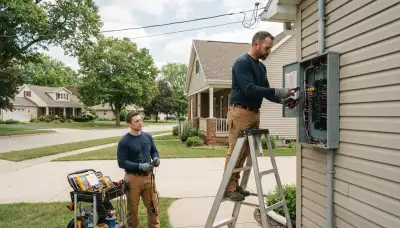
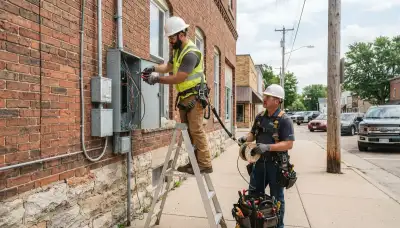
What Local Electricians Know About Seymour Homes
Most houses in Seymour went up in the fifties and sixties, framed in wood over full basements. The panel typically sits on a basement wall, and circuits run through finished walls above. A local electrician reads that layout before quoting the job, which changes the estimate and the timeline.
These homes most often need panel capacity work and circuit additions. A homeowner in Kaukauna, WI faces similar situations, though the house construction can differ. Both call for someone who knows how the wiring was originally run.
If something in your home feels off - a warm switch plate, a circuit that trips every morning - get it looked at before a small problem becomes a larger repair.
Electrical Work Matched to How Seymour Homes Are Built
An off-the-shelf approach fails in a house where the panel is at the bottom of a finished basement stairwell and every circuit runs through walls that were drywalled decades ago. The work is slower, and the path to each connection matters.
Wood-frame homes over basements allow a skilled crew to run new circuits from below without opening finished walls. Homes with a detached garage add a long outdoor run that ages differently from the house wiring. Each layout changes what the job involves. Expert home electrical inspection work starts by mapping exactly that.
Homes in Seymour commonly need quality GFCI circuit installation, reliable generator installation, specialists in electrical wiring, and expert smoke detector installation - each one matched to what the house was built to support and what it carries today.
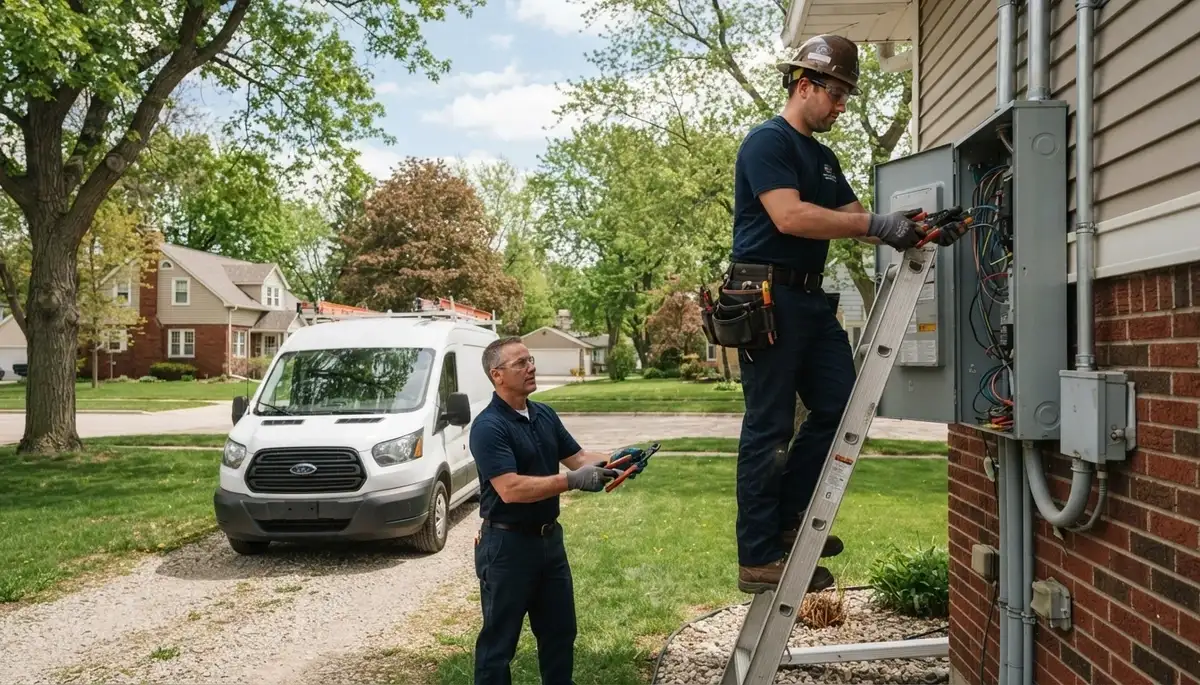
Why the Age of Seymour Homes Still Shapes the Work Today
Most homes in Seymour were built in the fifties and sixties. Houses from those years came with 60-amp service, two-prong outlets, and panels sized for a handful of circuits. Three things follow from that: the service is too small for modern loads, grounding was never run to the outlets, and the panel itself often has no room to add a breaker.
Breaker Box Running Out of Room
A homeowner opens the panel and finds every slot filled, or a breaker that trips and will not hold. In houses built in the fifties and sixties, the original panel handled a fraction of what a household runs today. Adding a circuit without upgrading the panel means doubling up, which creates heat at the connections and raises the risk of a fault.
Local electricians replace the panel or add a subpanel sized for what the house actually carries now. Work done this way holds because the new capacity matches the real load, not the load the house had when it was new.
Two-Prong Outlets Throughout the House
A homeowner finds two-prong outlets in every room and reaches for an adapter. Those outlets signal that grounding was never run when the house was wired. Without a ground path, a surge has nowhere to go except through whatever is plugged in. Appliances and electronics carry that risk quietly until something fails.
Adding grounded outlets or installing the outlets with test and reset buttons where code allows brings the house up to what modern equipment expects. The homeowner can plug in without an adapter and without the risk that came with the old two-prong setup.
Outlets Warm to the Touch
An outlet that feels warm, or a light that dims when a second appliance starts on the same circuit, points to wiring that has worked harder than it was built for. Homes built in the late fifties and sixties sometimes used aluminum wiring for branch runs, which expands and contracts at connections and loosens over time. That loosening creates heat.
Replacing the connections or adding approved connectors at each device stops the heat buildup and restores a stable connection. The outlet stops feeling warm, and the lights hold steady when a second load starts.
Panel Sized Before the Garage Was Finished
A homeowner adds a car charger or a set of shop tools in the garage and the panel starts tripping on a circuit it never tripped before. The service was sized for the house as it stood in the fifties or sixties, not for a finished garage with a 240-volt load added later. On a cold morning when the charger and the heat in the garage run together, the panel hits its limit fast.
Electricians add a dedicated circuit for the charger or upgrade the service to handle the full load. Homeowners in Black Creek, WI deal with the same added-load problem in similar houses. After the work is done, the charger runs, the tools run, and the panel does not trip.
Running New Circuits Through Finished Walls
A homeowner wants a new outlet in a room where the walls were drywalled forty years ago. Fishing wire through a finished wall in a wood-frame house over a basement takes planning: where does the circuit originate, what is in the wall cavity, and can the run go through the basement ceiling instead of through the wall itself?
Local electricians use the basement access to run circuits from below wherever the layout allows, which keeps the walls intact. When a wall run is unavoidable, the work is planned to limit the number of openings and patch cleanly when it is done.
Call (920) 214-0220 to arrange a visit with a local electrician who can look at what your house actually has and tell you what it needs. No pressure, just a clear picture of the work.
On Call Electrical brings consistent, reliable work to every Seymour home it touches.

Full Electrical Services Available in Seymour, WI
The list below covers the range of work available to homeowners here. Find what matches your situation and call to talk through the details.
Urgent Electrical Repairs for Seymour, WI Homes
- Electrical Repair - A breaker that will not reset or an outlet that stopped working points to a fault that needs a same-day look before it spreads.
- Outlet Repair - An outlet that sparks, feels warm, or fails to hold a plug is a connection problem that gets worse with every use.
- Switch Repair - A switch that crackles, feels hot, or controls nothing is a loose or failing connection behind the wall plate.
- Ceiling Fan Repair - A fan that wobbles, hums, or runs on only one speed has a wiring or motor issue that a repair call resolves.
- GFCI Outlets - The outlet with the test and reset buttons that will not hold its reset is protecting the circuit but telling the homeowner something tripped it.
If any of these match what you are seeing at home, a call gets someone out to look at it the same day.
Panel, Service, and Wiring Work for Seymour, WI Homes
- Electrical Panel Upgrade - A panel from the fifties or sixties with no empty slots left cannot safely carry what a modern household runs.
- Electrical Panel Installation - Replacing a fuse box or an undersized breaker panel with a properly sized unit gives the house room to grow.
- Electrical Service - The service entrance and the meter base that feed the panel were sized for a smaller load than most Seymour homes carry today.
- Electrical Wiring - Aluminum branch wiring and cloth-wrapped conductors from older houses need evaluation and, in many cases, replacement at the connections.
- New Construction Wiring - An addition or a finished basement needs circuits planned from the start rather than tapped from an already-full panel.
Homes built in the fifties and sixties were wired for a fraction of what they carry now. Upgrading the panel and the wiring behind it brings the house in line with what the homeowner actually plugs in.
Safety and Protection Work for Seymour, WI Homes
- Smoke Detector Installation - Detectors wired into the house circuit do not depend on a battery that goes dead at the wrong time.
- Fire Alarm Installation - A whole-house alarm system tied to the panel covers every room and sounds together when one detector triggers.
- Whole Home Surge Protection - A single surge event can damage every appliance and device connected to the house at once; a whole-home protector stops the surge at the panel.
- Lightning Surge Protection - A direct strike or a nearby hit sends a spike through the service entrance that reaches every circuit in the house within milliseconds.
- Home Electrical Inspections - A full inspection of the panel, the wiring, and the grounding tells the homeowner exactly what the house has and what it is missing.
A Seymour home built in the fifties or sixties was never inspected for what it carries today. An inspection finds the problems that are already there, before they show up as a tripped breaker, a warm outlet, or something worse. Getting that picture is the first step toward a house that runs safely under its current load.
Lighting, Outdoor, and Added-Load Work for Seymour, WI Homes
- Electric Car Charger Installation - A Level 2 charger needs a dedicated 240-volt circuit that most Seymour homes do not have without panel work first.
- Landscape Lighting - Outdoor lighting runs on a circuit that ages in the ground and at every connection point along the way.
- Security Lights - Motion-activated lights wired to the house do not depend on a battery and do not go dark when the battery dies.
- Generator Installation - A standby generator tied to the panel keeps the house running when the grid goes down, without extension cords across the floor.
- Ceiling Fan Installation - Adding a ceiling fan to a room that has only a light fixture means checking whether the box and the circuit can carry the added load.
Seymour homes are being asked to carry loads their original wiring never anticipated. Getting the circuits, the panel, and the outdoor runs right means the homeowner can add what the house needs without worrying about what the panel can handle.